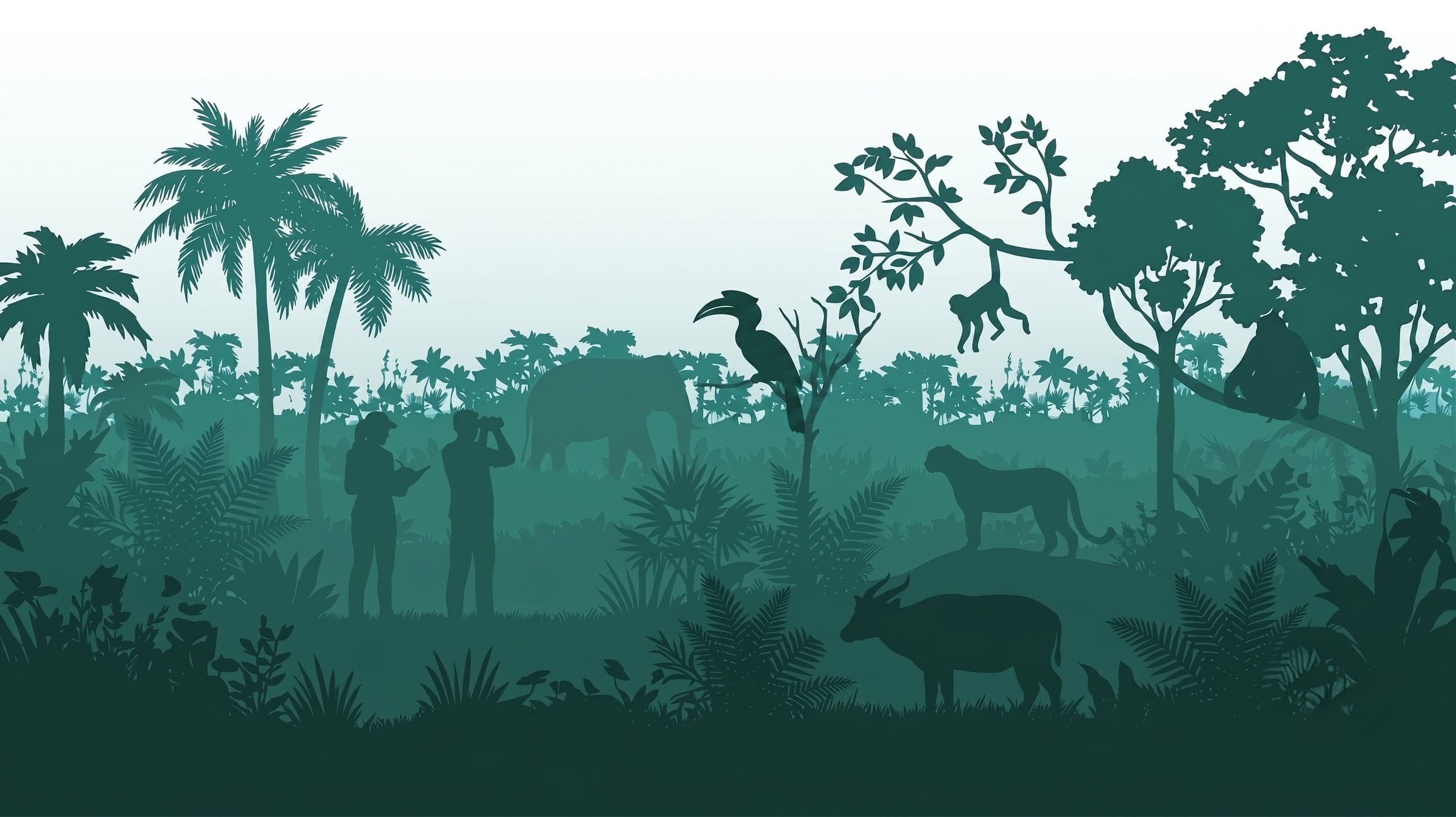
Educate.In starts in the forest, not the classroom, giving young people the language and the knowledge to understand the landscape they live in.
Why Educate.In?
What We Do
Educate.In’s core is Sekolah Rimbawan Kecil in Bogor, but its reach runs through every other program: waste education with In.Waste, field planting with In.Conserve and Adopt.In, and wildlife awareness alongside In.Allies volunteers. What stays constant is the principle: the children who learn to read a landscape will protect it as adults.

Core Program · Desa Cibunian, Bogor
Little Forest School holds regular sessions in the forests around Desa Cibunian, Kecamatan Pamijahan. A community that has evacuated from flash floods more than once. These children already know what a damaged watershed costs. Sekolah Rimbawan Kecil gives them the language and the knowledge to understand why.
What We Do
Forest-Based Learning Sessions. Held in the forest itself, not a classroom.
Watershed and Flood Education. Connecting what the community has lived through to why it happened.
Community of Desa Cibunian. Built around the children of a community that knows the cost firsthand.
With In.Waste · All Regions
Workshops for schools and youth groups on reducing, reusing, and recycling, run alongside In.Waste's community-level systems in every active region.
What We Do
School and Youth Workshops. Hands-on sessions on reduce, reuse, recycle.
Connected to In.Waste. Same field teams, same household-level systems.
Active in Every Region. Wherever In.Waste runs, these workshops run alongside it.
With In.Conserve & Adopt.In
Field planting sessions connect young people directly to restoration work, the same sites and species that In.Conserve restores and Adopt.In tracks.
What We Do
Field Planting Days. Young people plant alongside the teams doing the restoration work.
Connected to In.Conserve. Same restoration sites across all active regions.
Connected to Adopt.In. Some of what they plant becomes a tree someone else adopts.
Research & Awareness
Field ecology observation and biodiversity documentation give young people a working vocabulary for what they see, paired with climate change education that connects local action to global urgency.
What We Do
Biodiversity Documentation. Observation and recording skills used in the field.
Climate Change Curriculum. Local action framed within global context.
Field Ecology Observation. Learning to read a landscape, not just visit it.
With In.Allies
Wildlife and ecosystem awareness programs run in collaboration with In.Allies volunteers, the locally-based network that makes Hutan.in present where there is no permanent staff.
What We Do
Wildlife Awareness Programs. Built and delivered together with In.Allies.
Youth-to-Youth Delivery. Local volunteers, not outside experts, lead many sessions.
Feeds Back to the Network. What young people learn becomes part of what In.Allies knows.